
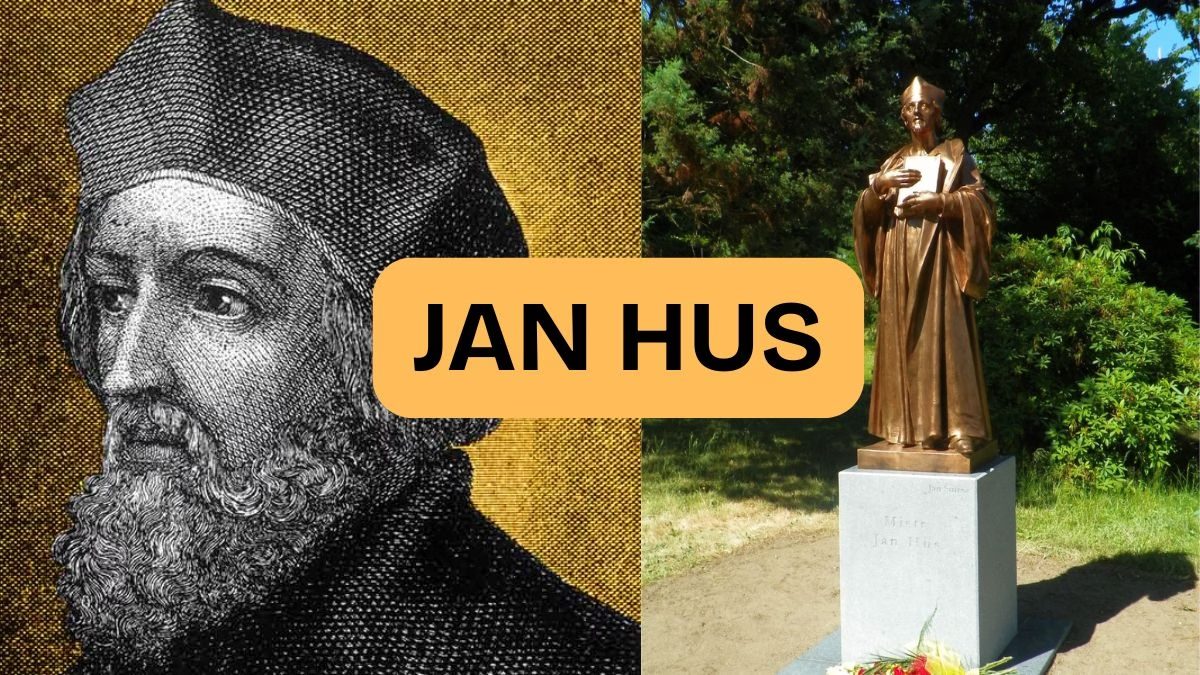
What do a bonfire, a village priest, and a silent bronze statue in Prague’s Old Town have in common? If you’ve spent any time wandering Czech squares—or Czech history—you’ve probably come across the name Jan Hus. He’s one of those figures who quietly appears in textbooks, monuments, and street names… but once you dig deeper, you realize he’s everywhere. His story is tied not only to Czech religion and rebellion but to the very soul of the Czech language. And every year on July 6th, Czechs pause to remember the man who challenged authority, preached in Czech, and became a national symbol—not with a sword, but with his words.
🔥 Why Do Czechs Celebrate Jan Hus on July 6th?
If you’ve ever wandered through Prague’s Old Town Square and stopped by the towering statue of a bearded man staring sternly across the square, you’ve met Jan Hus. Or at least, his bronze (nowadays more like green) version.
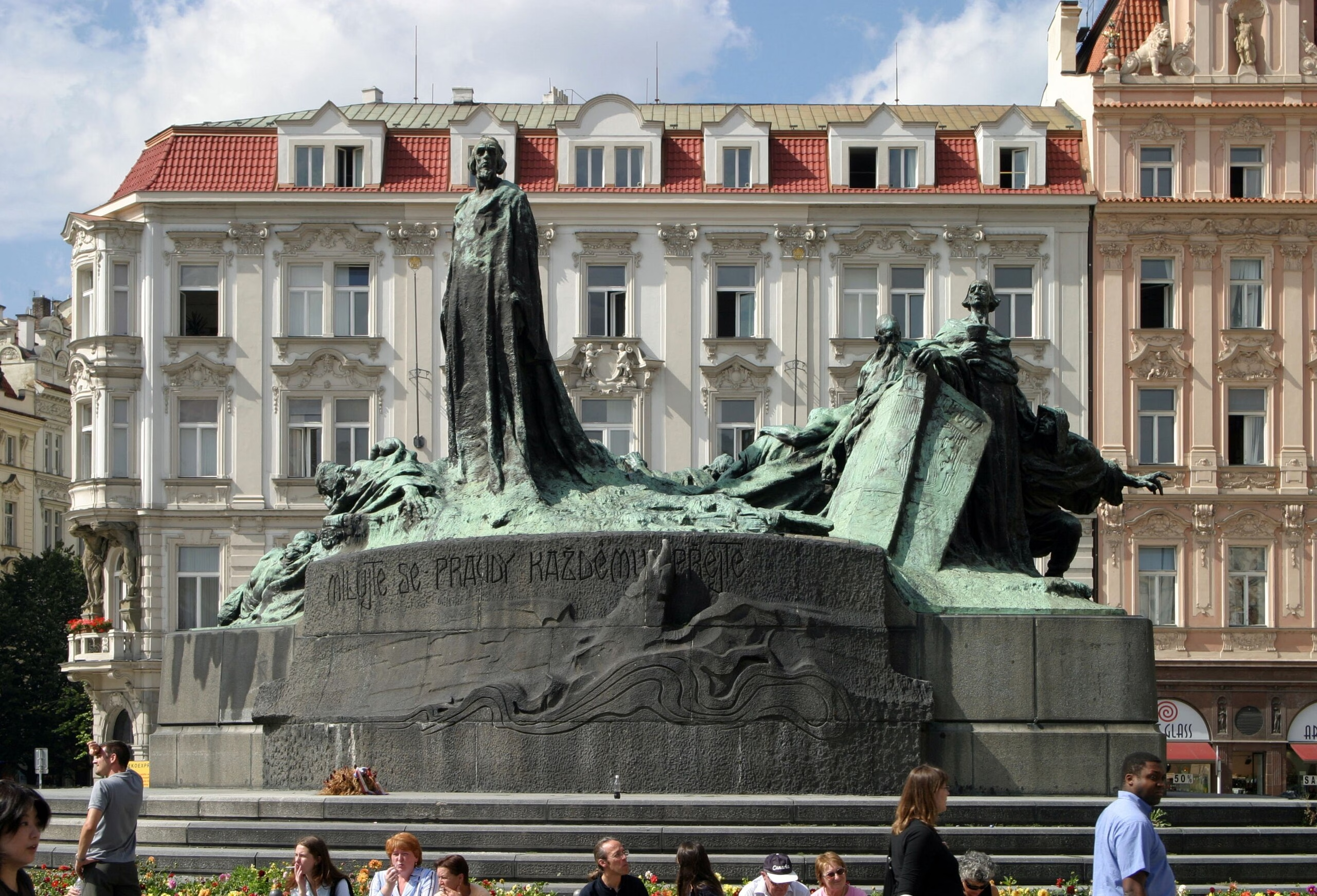
But who was Jan Hus? And why do the Czechs give him his own holiday every year on July 6th?
This isn’t just a history lesson. Jan Hus is part of the Czech national identity, and if you’re learning the language or curious about the culture, understanding Hus is essential.
Grab your cold pivo or iced coffee. Let’s go back a few centuries.
✝️ From South Bohemia to the Bonfire
Jan Hus was born around 1372 in a village called Husinec—a name derived from husa, meaning goose. (That fact will come back later.) He became a priest, theologian, and eventually a reformer. And in classic Czech fashion, he started speaking uncomfortable truths.
He criticized the corruption of the medieval Catholic Church, questioned papal authority, and most radically… preached in Čeština. While that sounds obvious today, it was a big deal in a Latin-dominated church. He believed people deserved to hear the gospel in their own language.
This wasn’t just religious reform—it was also a linguistic revolution.
But of course, the powers-that-be didn’t love that.
🔥 The Price of Truth
In 1415, Hus was summoned to the Council of Constance under the promise of safe conduct. Spoiler: it wasn’t so safe. He was imprisoned and asked to recant his views. He refused.
On July 6, 1415, he was burned at the stake.
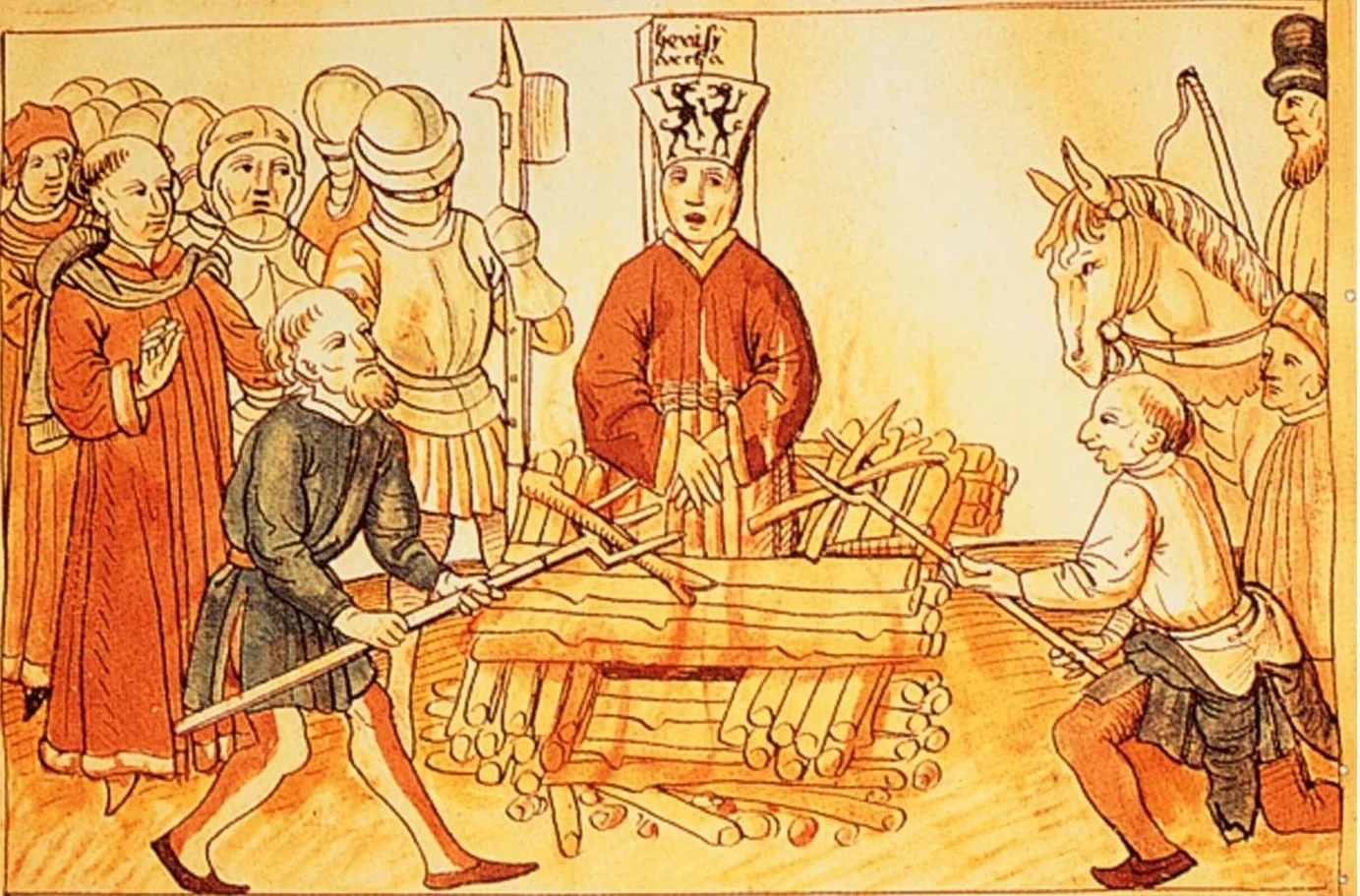
His final words weren’t angry or fearful. Instead, they reflected calm conviction in the truth he had preached:
„V té pravdě evangelia, kterou jsem psal, učil a kázal ze slov a výkladů svatých doktorů, dnes vesele chci zemříti.“
“In that truth of the Gospel which I have written, taught, and preached from the words and interpretations of the holy doctors, I am glad to die today.”
These were not the words of a heretic, but of a man who believed the truth was stronger than death.
And the goose? Well, legend says he declared: “You may roast this goose, but a swan will rise…”—a poetic prophecy tied to Martin Luther. It’s a beautiful line. But as with many national heroes, what he symbolized became even more powerful than his exact words.
Jan Hus Day in Czechia Today
Fast forward to the present: July 6 is a public holiday in the Czech Republic, known as Den upálení mistra Jana Husa—the Day of the Burning of Master Jan Hus.
It’s a day of remembrance, but also identity. Czechs don’t celebrate with fireworks or parties. Instead, it’s more reflective. You might see flowers laid at the Hus monument in Prague, or special broadcasts and discussions on TV.
It’s also a great opportunity for Czech learners to:
- Learn about religious vocabulary (you can learn some of them, like “ježiši” here) and historical expressions
- Practice pronouncing Jan Hus properly (Hint: “Hus” sounds like “hooss” in Czech)
- Reflect on what it means to stand up for truth, even when it costs everything
- Check out this short video about Jan Hus

💡 Want to Explore More Czech Legends?
Jan Hus isn’t the only figure who shaped Czech identity through story, language, and symbolism.
✨ If you love tales with courage, mystery, and language learning mixed in, you’ll love my Czech Folklore Course.
We dive into Czech stories like Polednice, Vodník, and Jezinky, while learning real Czech language—the way people speak it.
🗣️ Czech Phrases to Learn This Sunday
| Čeština | Angličtina |
|---|---|
| Mistr Jan Hus | Master Jan Hus |
| Den upálení mistra Jana Husa | The Day of the Burning of Master Jan Hus |
| Pravda vítězí | Truth prevails |
| Husinec | The village where Jan Hus was born |
Psst—Pravda vítězí is also the motto of the Czech Republic. You’ll find it engraved on the presidential banner!
🕯️ Final Thoughts
Learning Czech isn’t just about grammar drills or memorizing case endings. It’s about stepping into a culture that has, time and again, chosen truth, language, and identity over comfort.
Jan Hus reminds us that words have the power to change the world. That language is tied to liberty. That Czech isn’t just a language—it’s a way of saying, “We think for ourselves.”
So this July 6th, light a candle. Whisper pravda vítězí. And remember: even if you’re still getting the hang of Czech grammar, you’re part of something brave and beautiful.
Pa pa!


