So, you’ve decided learning Czech is your next project? Skvěle! (Great!) But let’s be honest, this language is not exactly known for being easy. In fact, it’s one of those languages that makes learners stare at their textbooks in zoufalství (despair).
Between tongue-twisting words, mind-bending grammar, and sounds that seem physically impossible to pronounce, Czech is a challenge. But don’t worry! I’m here to guide you through the jazykové peklo (language hell) and help you come out the other side sounding like a true Czech!
Got here because of this Short? You’ve got taste 😎
If not, go fix that! My channel’s waiting with Czech lessons and bad puns!
🔡 The Alphabet May Look Friendly… Until It Isn’t 🤨
At first glance, the Czech alphabet seems simple, just your standard Latin letters with a few extra decorations. Then you meet ř.
Yes, the infamous ř (as in Dvořák). It’s not an “r,” it’s not a “zh” sound, it’s … both at the same time! How fun! Try saying “zh” while rolling an “r.” If that feels impossible, congratulations! You’re officially a Czech learner.
🛠 Survival Tip: If you can’t say ř, just embrace the Czech mumble strategy; many natives do it too and some even have to visit a logoped (speech therapist) to get it right.
Throw in Some Cultural References 🍻
Czech isn’t just a language, it’s a whole záhada (mystery) wrapped in knedlíky (dumplings) and sarcasm. If you really want to master it, you’ll need to embrace the culture, too.
Ever watched a classic Czech comedy? If not, you’re missing out on peak absurdity – grumpy děda (grandpa), an endless pivo (beer) supply, and someone dramatically shouting “ty vole!” (a phrase that covers everything from shock to mild annoyance).
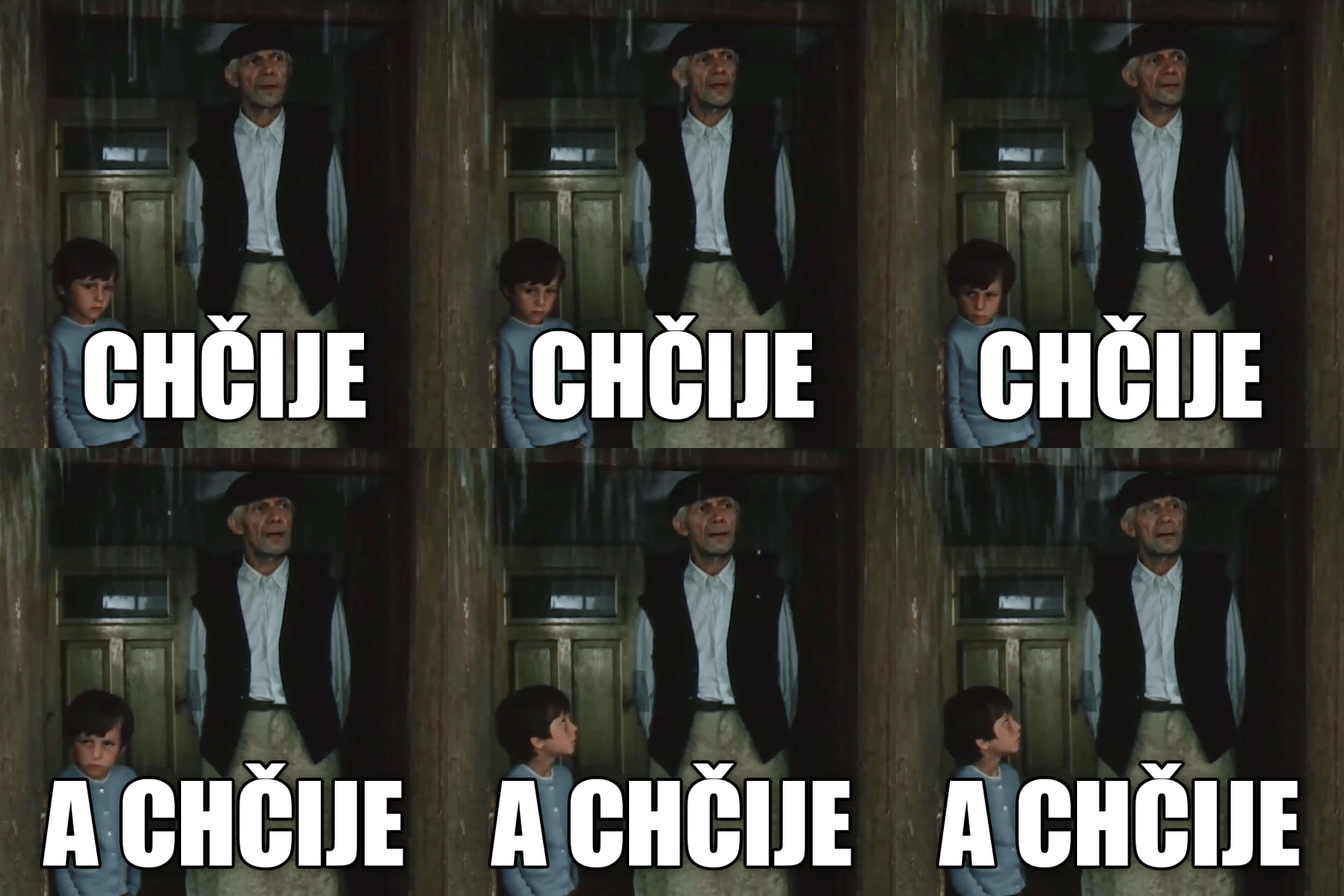
Need to sound like a local? Just complain about the weather. Too hot? “Je hrozný vedro!” (It’s hot as hell!). Too cold? “Je zima jako v psinci” (It’s freezing like a doghouse – yes, really.). Czechs love a good weather rant ☔☀️, you’ll blend right in. Actually, if you want to complain about the rain, here are some helpful phrases you can use.
And if you ever get invited to a Czech family lunch, prepare for battle. Saying “Už nemůžu” (I can’t anymore) won’t help; your babička (grandma) will just smile and load up your plate with more knedlíky (dumplings). At this point, knowing Czech won’t save you, but hey, at least you can say “Už nemůžu!”, not that anyone will listen.
Cases, Cases Everywhere! 🤢
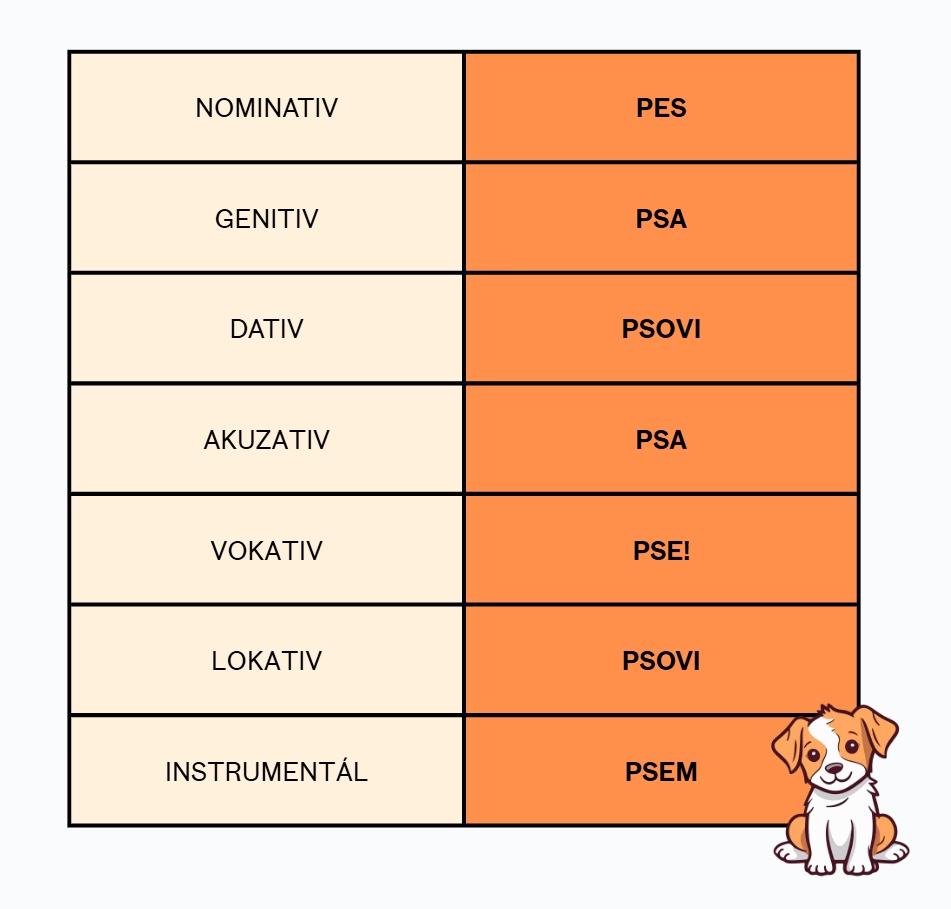
English speakers are used to simple sentences: I see a dog. In Czech? Forget about it. Czech has seven grammatical cases, which means pes (dog) changes depending on its role in the sentence:
- Vidím psa (I see a dog).
- Jdu se psem (I walk with a dog).
- Dám to psovi (I give it to the dog).
By the time you remember which declination to use, the dog has probably left.
🛠 Survival Tip: If you get stuck, just throw in něco (something) or po (it) and hope for the best.
The Vowel Situation is… Concerning 🤔
Czech has words like krk (neck), prst (finger), and smrt (death). Where are the vowels? No one knows. The Czech language just decided they were optional.
Even better, entire sentences exist without vowels: Strč prst skrz krk (Stick your finger through your throat). A useful phrase, right?
🛠 Survival Tip: If you can survive saying that tongue twister, you’ve officially leveled up in Czech – you’re basically fluent 👏🏻 And if you want to learn more of these torturous sentences, check out this post right here!
Verbs Change… A Lot
Czech verbs don’t just sit there, they transform based on person, tense, and even aspect (whether an action is completed or ongoing).
Want to say I was eating? That’s jedl/a jsem. But I have eaten? That’s snědl/a jsem. And just when you think you’ve got it, you realize there are two different future tenses. Super!
🛠 Survival Tip: When in doubt, use dělat (to do) or být (to be). These verbs will get you through most situations.
Czechs Love Diminutives 🤏🏻🐱
Czechs make everything sound cute. A kočka (cat) can become kočička, and a pivo (beer) can become pivíčko. Even names change, your friend Petr might suddenly be Petříček. Here’s a list of all the name diminutives Czechs love to use!
But don’t be fooled, just because something has a diminutive doesn’t mean it’s actually small. If someone offers you a slivovička, it may sound cute, but that shot of slivovice (plum brandy) will burn your soul.
🛠 Survival Tip: If a word has -ička or -eček at the end, prepare for something either adorable or dangerously strong.
Ready to Take on Czech? 💪🏻
Ano, learning Czech is tough. But if you can survive ř, vowel-free words, and cases that seem to change on a whim, you’re basically unstoppable. And hey, if all else fails, just smile, nod, and say “no, to je zajímavé” (well, that’s interesting) – it works in most situations.
Pa pa!