
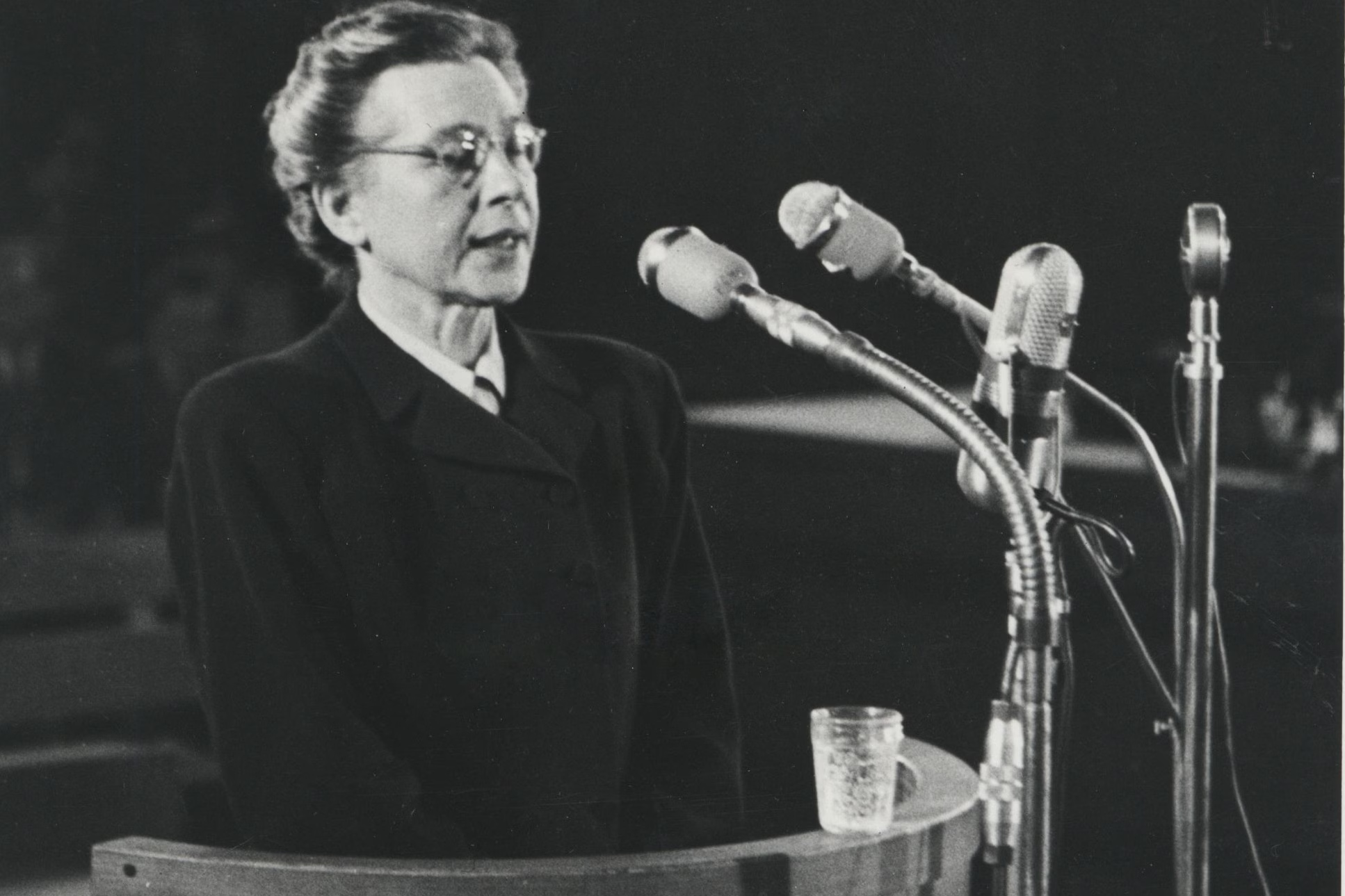
If you’re learning Czech, you’ve probably heard names like Jan Hus or Václav Havel. But have you heard of Milada Horáková? Her name is not just a chapter in Czech history — it’s a symbol of courage, justice, and resistance. Let me tell you why she deserves a place in your Czech vocabulary and your heart.
Who Was Milada Horáková?
Milada Horáková was born in 1901 in Prague. She became a lawyer and devoted her life to fighting for democracy and women’s rights.
A key part of her activism was through the Ženská národní rada (ŽNR) – the Women’s National Council, where she played a leading role in advocating for women’s rights, legal protections, and social equality. Through the ŽNR, she worked tirelessly to promote gender equality in a rapidly changing society.
During World War II, she joined the resistance against the Nazis and was imprisoned for her courage. After the war, she continued her political work, opposing the rise of Communism in Czechoslovakia.
A Life of Resistance and Sacrifice
Milada’s resistance did not end with the Nazis. When the Communists took control in 1948, she spoke out against their oppressive regime. This was a dangerous choice — in 1949, the secret police arrested her and charged her with conspiracy in a fabricated political trial.
Despite international protests by famous figures like Albert Einstein and Winston Churchill, Milada was sentenced to death. On 27 June 1950, she was executed by hanging at Pankrác Prison in Prague.
Her Last Words: A Message of Love and Honor
Just before her execution, Milada spoke words that still resonate deeply:
„Padám, padám, tento boj jsem prohrála, odcházím čestně. Miluji tuto zem, miluji tento lid, budujte mu blahobyt. Odcházím bez nenávisti k vám. Přeji vám to, přeji vám to…“
“I fall, I fall, I have lost this fight, I leave with honor. I love this country, I love its people — build prosperity for them. I leave without hatred towards you. I wish you this, I truly do…”
Her strength and forgiveness, even towards those who condemned her, made her a symbol of moral courage.
Remembering Milada Today
In Prague, you’ll find streets, schools, and statues named after Milada Horáková. The Czech Republic honors her every year on 27 June, the Day of Commemoration for the Victims of the Communist Regime. Her story reminds us why freedom of speech and human rights are priceless.
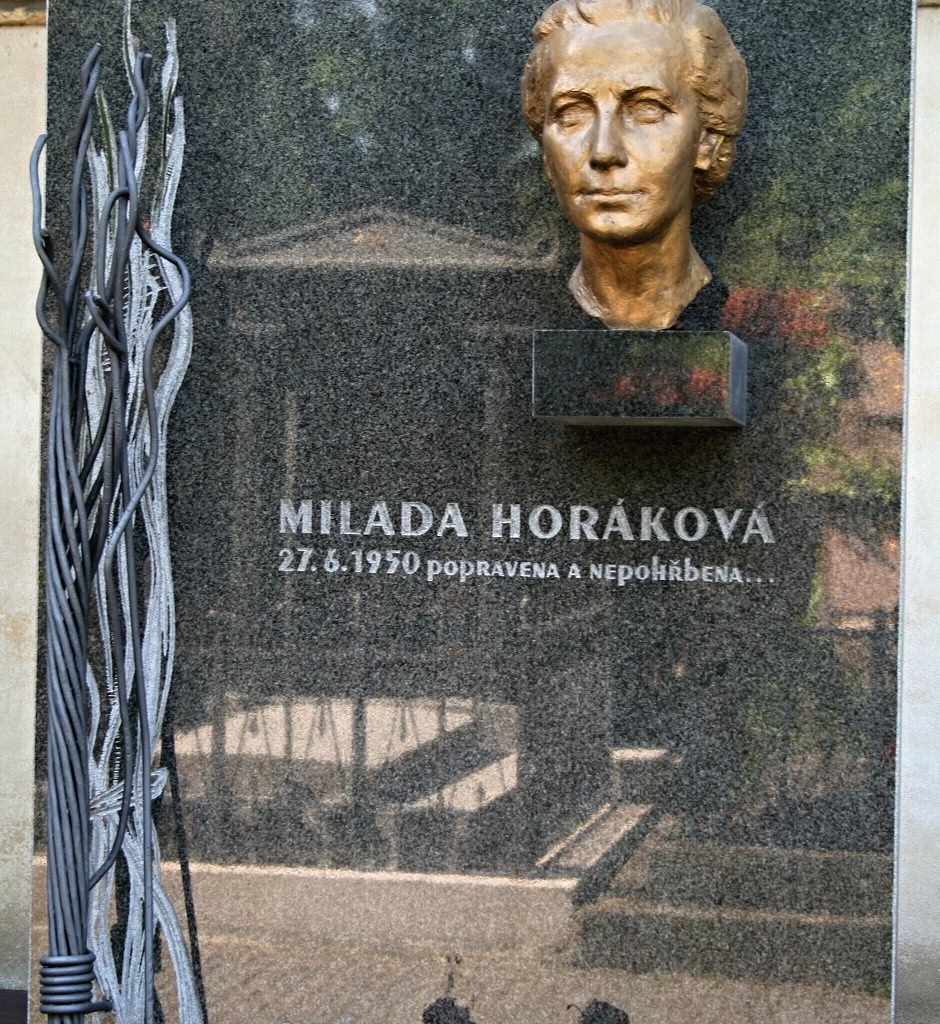
This is the symbolic grave of Milada Horáková, located at Vyšehrad Cemetery near the Basilica of St. Peter and Paul in Prague. The marble headstone with a bronze bust honors her memory, as well as that of all victims and opponents of totalitarian regimes (1939–1945 and 1948–1989).
Watch Milada’s Story Come to Life
If you want to see Milada Horáková’s incredible story in a powerful way, I recommend the 2017 movie “Milada.” It’s a captivating film that brings her courage, struggles, and sacrifice to the big screen. You can also check out the short animated video “Milada Horáková” on ČT edu. It’s a bite-sized but powerful look at her life, ideals, and the courage that made her a symbol of resistance. Educational and gripping – perfect if you’re short on time but big on curiosity.
Why I Share Stories Like This
Learning Czech isn’t just about grammar drills or memorizing vocabulary. It’s about living the culture and history behind the words. Milada’s story helps us understand why Czechs value freedom so much — and why every word you learn carries history and meaning.
Want to learn more Czech and get important stories like this? Join my lessons or subscribe to my newsletter!


