
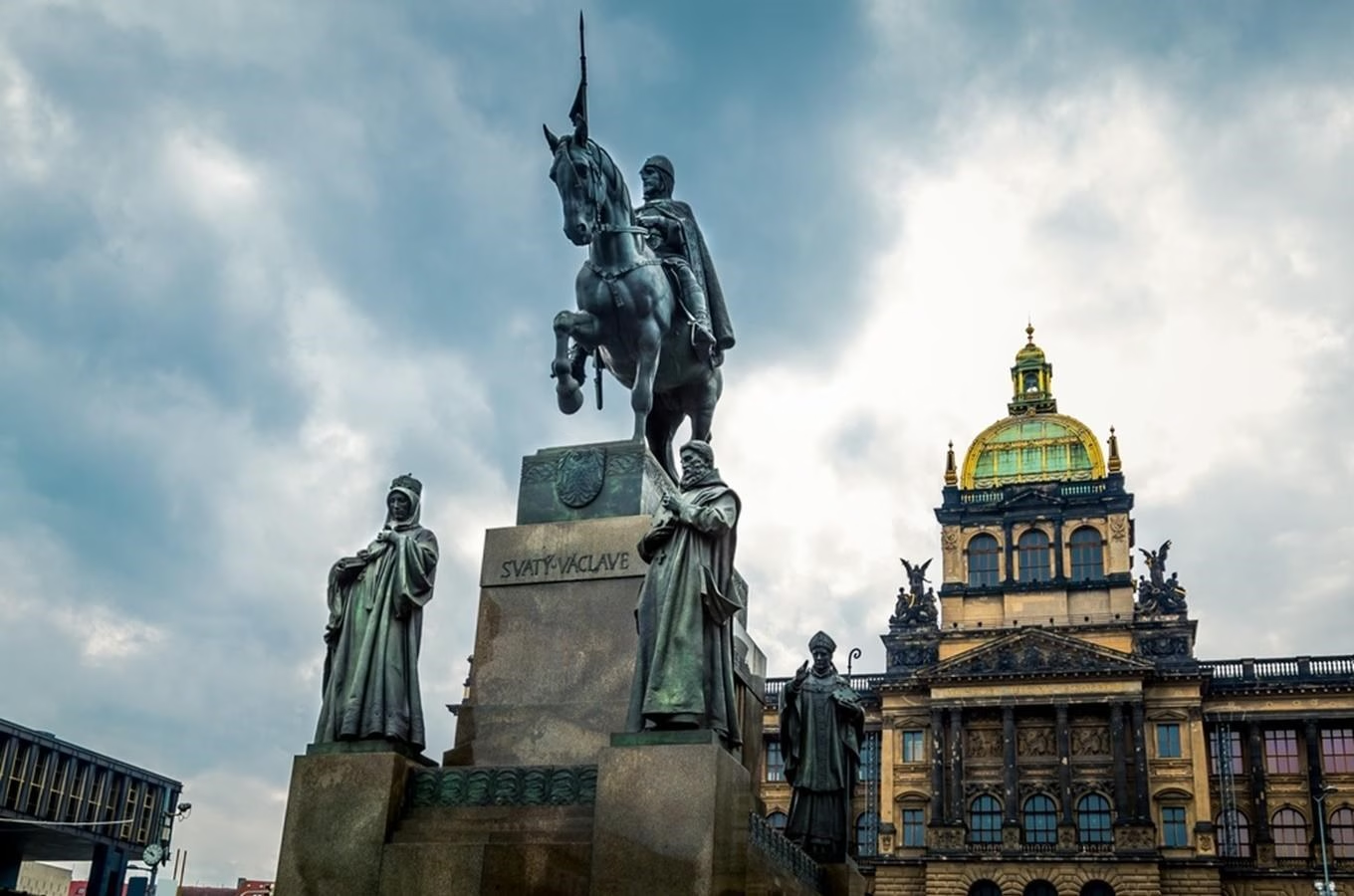
If you notice that on September 28th, half of Prague is closed, the tramvaje are half-empty, and even your Czech teacher replies with “Promiň, ale je státní svátek”, don’t panic. It’s not another lockdown. It’s Den české státnosti (Czech Statehood Day).
👑 So Who’s the Star of the Day? Svatý Václav!
This day celebrates Svatý Václav (Saint Wenceslas), one of the most famous members of the Přemyslovci (Přemyslid – I had no idea the name was spelled like this in English, you learn something new every day, huh?) dynasty.
And here’s something students often ask:
“Who ruled the Přemyslids before they were a royal family? Who was above them?”
👉 Nobody ruled above them.
Before they became kings, the Přemyslids already ruled the Czech lands — but as knížata (dukes), not as royalty. The country was called the České knížectví (Duchy of Bohemia), not a kingdom yet.
- The first real (historically confirmed) ruler was Kníže (duke) Bořivoj I (around 870 AD).
- In 1085, Vratislav II became the first Czech ruler to be granted the title of král (king) – but only for his lifetime.
- Only in 1198, under Přemysl Otakar I, did the Přemyslovci (I don’t like the “Přemyslid” translation, sorry) receive a hereditary royal title, officially becoming a true kingdom and royal dynasty.
So – they were in charge all along, just with fewer crowns and more political stress.
🎓 Do you speak advanced Czech? Dive deeper with this video!
If you already rozumíš česky docela dobře and want to level-up your listening and historical vocab, check out this excellent Czech-language video:
- Svatý Václav – ČT edu: A clear, concise (approx. 2:40) explanation of who Saint Wenceslas was – the Czech duchy, his rulership, his brother’s betrayal, and why he became a symbol of Czech statehood.
- Bonus: It comes with pracovní listy (worksheets) you can download and use for self-study.
💡 Tip:
Pause after each section of the video and write down 2-3 new words.

⚔️ Medieval Drama, Family Edition

Boleslav I.
Saint Wenceslas ruled as a kníže (duke) (you should know this word by now) – calm, diplomatic, křesťan (Christian), and generally not stabbing people. He focused on building peace, supporting churches, and keeping the Germans friendly rather than angry.
His brother Boleslav? Yeah… let’s say he preferred Game of Thrones leadership. Less praying, more “solve it with an axe.”
So one day, Boleslav invites Václav to a nice family celebration — like, “Come over, brother, we’ll have some mead, maybe roast a goose.” Very wholesome.
Except… not.
As Václav arrived at the church in Stará Boleslav (a beautiful city called “Brandýs nad Labem-Stará Boleslav” now, I recommend visiting it) for morning mass, Boleslav and his buddies were waiting. Instead of hugs and koláče, he got stabbed to death at the church doors.
Medieval HR would call this: “Disagreement within upper management.”
Psychologists would call it: fratricide with light religious overtones
But somehow, through this dramatic family mess, Václav became a symbol of Czech statehood, faith, and peaceful leadership – while Boleslav got the nickname “Ukrutný“ (the Cruel).
(He did, to be fair, make the Czech state stronger… just with more blood and fewer prayers.)
👉 Why It Matters
28th September is not just about an old duke. It’s a symbol of:
✔ the beginning of Czech statehood
✔ national identity
✔ the idea that diplomacy can be stronger than a sword
📝 Useful Vocabulary
| Čeština | Angličtina |
|---|---|
| státní svátek | public holiday |
| volno | free day |
| kníže | duke |
| král | king |
| Svatý Václav | Saint Wenceslas |
| Přemyslovci | Přemyslid dynasty |
| křesťanství | Christianity |
| Den otevřených dveří | open day |
How to Celebrate Like a True Czech
✅ Sleep in.
✅ Whisper “Svatý Václave, vévodo české země” while drinking coffee.
✅ Raise a pivo and say “Na zdraví!” ( cheers!)
❌ Do not climb the horse statue on Václavák. (For the love of God)
❤️ Final Thoughts
Behind this quiet holiday lies a thousand-year-old story of statehood, betrayal, and one stubborn little nation in the heart of Europe that still survives – with beer, and seven grammatical cases.
Happy Den české státnosti!
Pa pa!


