
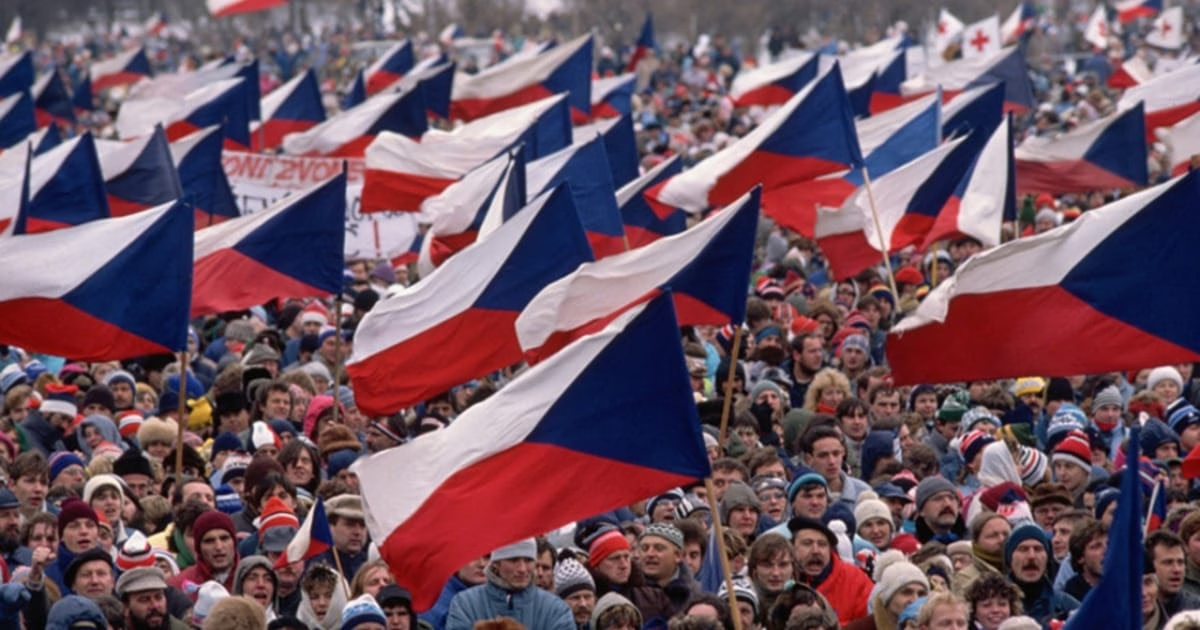
17th November is Den boje za svobodu a demokracii – the Struggle for Freedom and Democracy Day. It ties together two powerful student stories: the brutal crackdown of 1939 and the peaceful wave of 1989 that we now call the Sametová revoluce – Velvet Revolution. Same date, two chapters, one message: svoboda není samozřejmost – freedom isn’t a given🕯️
But Was It That Simple? (Spoiler: No.)
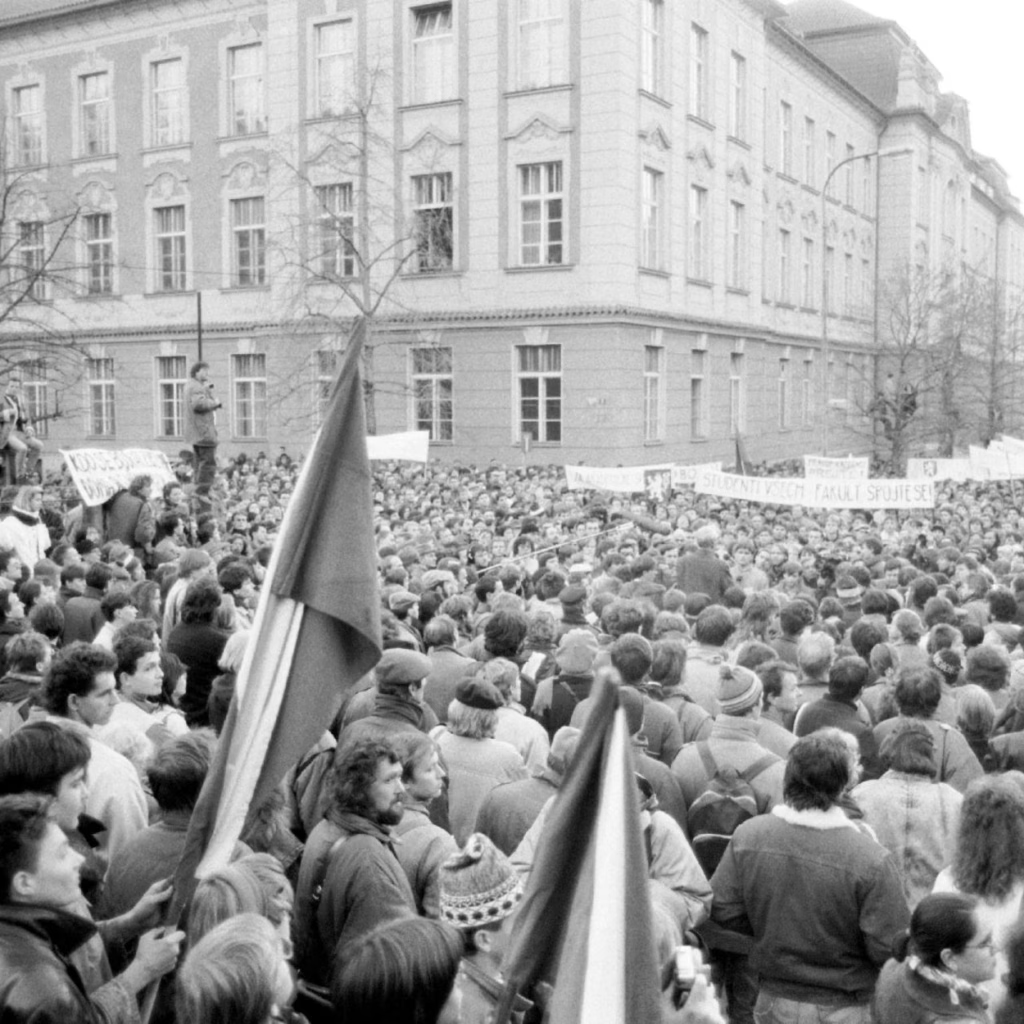
Freedom didn’t arrive with a tidy bow. In 1989, a student march in Prague was met with force, and that shock sparked days of peaceful protests. People began jingling their keys – a gentle, ringing way of saying “time to unlock the future.” 🔑
A quick rewind: 1939 → 1989
The date isn’t random. On 17 November 1939, after the funeral of student Jan Opletal, the Nazi regime brutally crushed Czech student protests: universities were closed, student leaders were executed, and over a thousand students were sent to concentration camps. The exile community later marked 17 November as International Students’ Day. Half a century on, Czech students chose the same date to honor their predecessors – and to say never again.
17 November 1989, hour by hour(ish)
Students began with a permitted memorial gathering at Albertov, then moved toward Národní třída. What started as remembrance swelled into a peaceful march for change. Police kettled the crowd and used batons; the images and eyewitness stories, plus a rumored death, ignited public outrage. Within forty-eight hours, theaters went on strike, artists spoke out, and people across the country were buzzing with the same question: “Co bude dál?” – What will happen next?
What happened next (fast!)
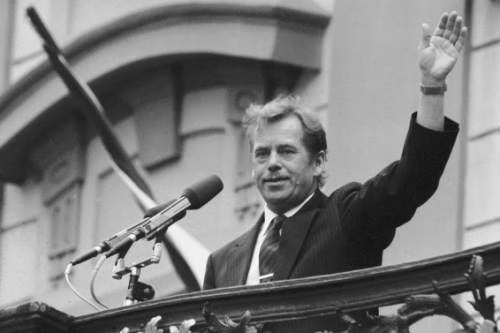
Civic groups unified under Občanské fórum (Civic Forum), mass rallies filled Václavské náměstí, and the general strike on 27 November showed how broad the support had become. By early December, censorship began to crumble; by late December, Václav Havel, a former political prisoner and playwright, was elected president. A revolution with almost no broken windows, carried by voices, candles, and keys 🕯️🔑
What Happens on November 17th Today
Prague keeps it thoughtful rather than flashy. You’ll see candles and flowers on Národní třída and at Albertov, and you’ll hear music and speeches on Václavské náměstí. The civic Concert for the Future = Koncert pro budoucnost brings artists and NGOs together to celebrate democratic values, and Korzo Národní fills Národní třída with talks, performances, and moments of quiet thanks. If you’re here, bring warm gloves… and maybe a small tealight ✨
Mini Czech Lesson You’ll Actually Use 🇨🇿
Words:
státní svátek = public holiday
svoboda = freedom
demokracie = democracy
odvaha = courage
svíčka = candle
klíče = keys
Phrases:
Sametová revoluce = Velvet Revolution
Nikdy nezapomeneme. = We will never forget.
Vzpomínáme na studenty a všechny, kteří se postavili za svobodu. = We remember the students and everyone who stood up for freedom.
Culture Notes & Sounds
The symbols are quiet but unmistakable: candles lining the street, keys in pockets ready to jingle, and sometimes „Modlitba pro Martu“ floating from a speaker. You won’t get fireworks; you’ll get conversations, hand-warmers, and that very Czech mix of dry humor and deep feeling. 🎶
Do You Speak Advanced Czech?
You can watch this short educational video about 17 November in Czech and see how much you catch. Aim for meaning first, details second. And if you’re feeling bold, practice saying: „Svoboda není samozřejmost.“ (Slowly. Clearly. And yes, you can roll your r and stress your ř later 😉)
- Sametová revoluce – video
- If you want to learn about this day more in depth check out this Wikipedia page – Velvet Revolution – Wiki
- Try this lovely worksheet inspired by November 17th.
Final Thought
Learning a language is a tiny act of freedom: new words, new views, new voices. Light a candle, learn a line, and let the keys remind you how even a small sound can move history 🔑🕯️
Pa pa!


