
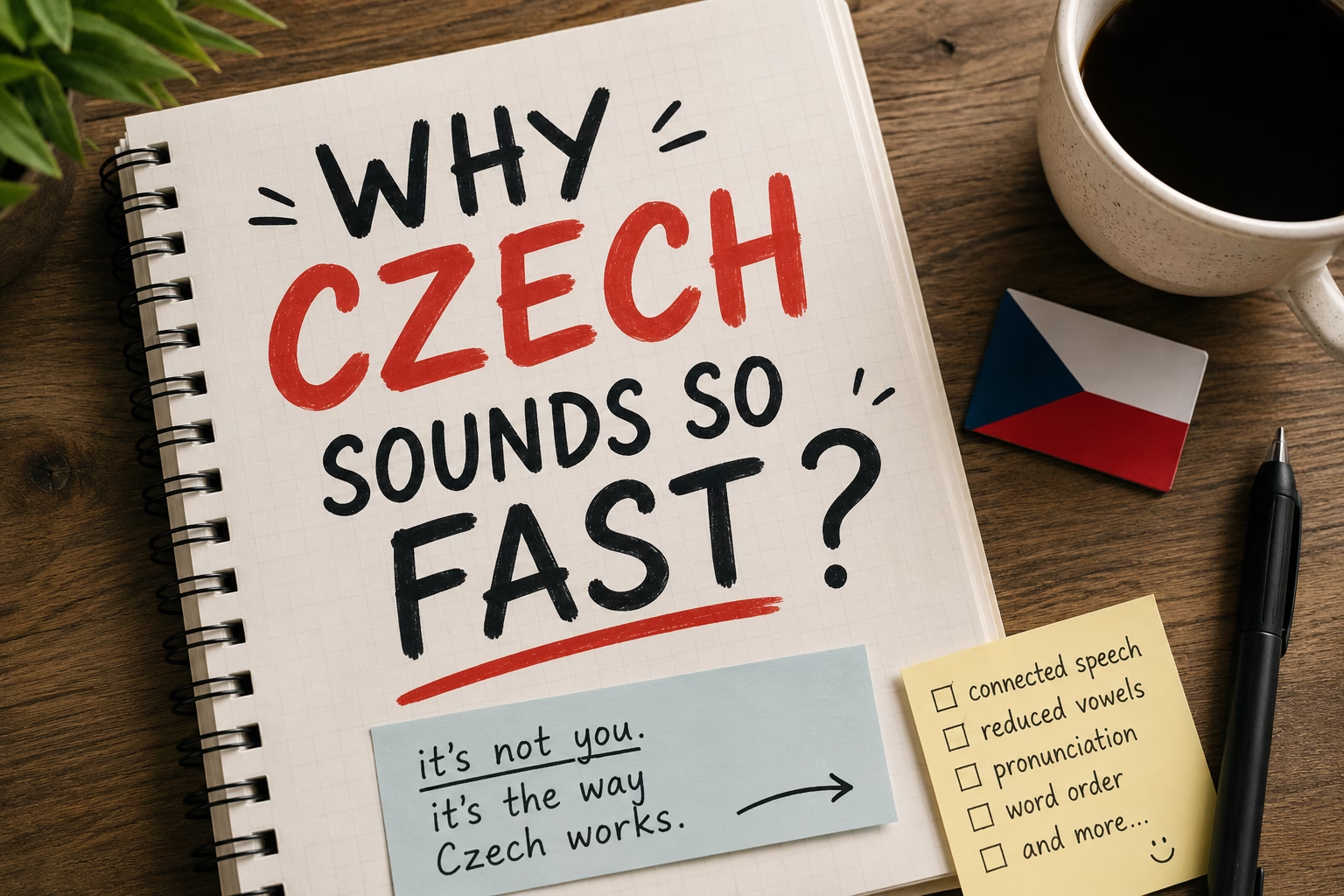
All Czech learners have that moment.
You’re feeling confident. You finished your Duolingo lesson 🦉 You understood a whole Instagram caption in Czech. You may have even successfully survived ordering coffee in Prague without switching to English☕
And then two native Czech speakers walk past you, and suddenly it sounds like:
“šmnamblžejojasnědobrýno”
Cool. Super. Excellent. 😭
If Czech sounds ridiculously fast to you, don’t worry – you’re (definitely! I hear about this all the time from my students) not alone. Native Czech speakers aren’t trying to confuse you on purpose.
The truth is: spoken Czech works VERY differently from textbook Czech.
But once you understand why it sounds so fast, listening becomes much easier.
1. 🎧 Czech Is a “Connected” Language (a bit of grammar)
One of the biggest shocks for learners is realizing that Czech speakers don’t really … separate words clearly when speaking naturally 😂 This sounds like a bad joke a Czech learner hates to hear but, sorry, it’s true.
Everything blends together.
For example:
- v parku
- z Ameriky
- s kamarádem
- k domu
These tiny prepositions often merge directly into the next word because they don’t contain vowels.
So instead of hearing:
“v… parku”
you hear:
“fparku”
And instead of:
“z Ameriky”
your brain hears:
“sameriky”
Basically, Czech likes turning multiple words into one giant sound blob 💀
No wonder students panic.
2. 🫠 Native Czech Is WAY Messier Than Classroom Czech
Textbook Czech sounds beautiful and polite (isn’t that suspicious already, huh?).
Real Czech sounds like somebody removed half the spaces from the sentence.
Native speakers:
- shorten words
- swallow endings
- reduce sounds
- connect sentences together
- speak emotionally and quickly
For example:
- Já jsem → becomes sem (we use pronouns only for emphasis, if you overuse “já”, well let’s say you’ll sound a bit forceful.. all the time 😥)
- Viděl jsi ten nový film? → so eloquent but sorry – ne! ✨ “Viděls ten nový film?“
- Jak se daří v práci? → How is it going at work? Nothing to be changed here, right? WRONG! It’s actually “Co práce?”
And honestly? This happens in every language.
English speakers say:
- “gonna”
- “wanna”
- “didja”
Czech just does it with extra consonants for dramatic effect 💅
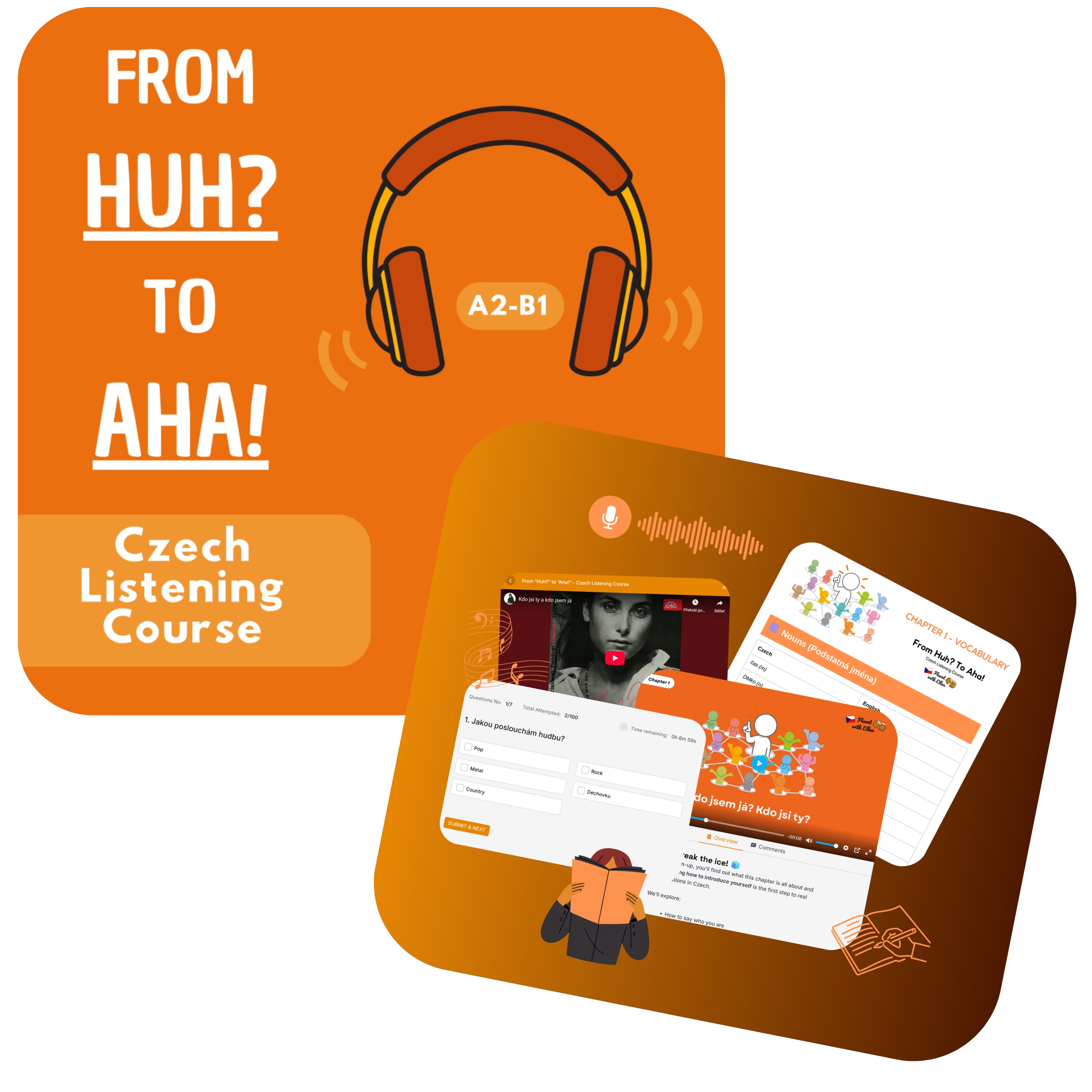
Czech Is Winning. Time To Fight Back!
Turn confusing Czech sound soup into real, understandable speech 🎧
This listening course helps you train your ear for connected speech, natural pronunciation, and the way Czech people actually talk.
No more “cože?” every 5 seconds 😌
3. 🤯 Czech Has an Aggressive Amount of Consonants
Speaking of consonants … sometimes Czech only sounds fast because your brain has nowhere to rest.
I mean…
- čtvrtek
- zmrzlina
- vstup
- Strč prst skrz krk
This language really looked at vowels and said:
“Optional.” / “Not necessary.” / “Who?”
For English speakers especially, Czech can feel compressed because words contain lots of consonant combinations without clear pauses.
Native speakers process these automatically.
Learners hear verbal gymnastics.
4. 📺 Your Ear Needs Training – Not More Grammar
A lot of learners think:
“If I just study more grammar/read more, I’ll finally understand Czech.”
Not exactly.
Listening is a separate skill.
Your brain needs exposure to:
- Czech rhythm
- connected speech
- reductions
- slang
- natural pacing
And the best way to build that?
Consistent listening.
Not once a week.
Not one giant Netflix binge every two months.
Tiny daily exposure works MUCH better.
5. 🎙️ Build a “Czech Bubble” Around Your Brain
One of the BEST things you can do for your listening skills is stop treating Czech like a school subject… and start treating it like background noise in your daily life.
The more often your brain hears Czech, the less “foreign” it starts sounding.
And no – you do NOT need to understand everything immediately.
Actually, passive listening helps a LOT.
Try this:
🎧 Find a Czech podcast and listen while:
- cleaning
- walking
- cooking
- pretending to work
📺 Watch Czech YouTube channels regularly – even if you only understand 40% at first.
🎵 Listen to Czech music too. Yes, even the gloriously dramatic 80s songs from Michal David.
Will it feel slightly chaotic hearing “NON STOP” at full volume while trying to learn noun cases? Absolutely.
Will it get Czech stuck in your brain forever? Also yes 💅
🧠 Your brain is still learning:
- rhythm
- sentence melody
- pronunciation patterns
- common phrases
And over time, things that once sounded like gibberish start turning into actual understandable words.
Which is honestly one of the most satisfying feelings ever ✨ (Trust me! i’ve been learning Hungarian…)
Pa pa! (and good luck 😉)


